2026-09-24
Dermatology Approaches to Men's Acne Scar Treatment
Explore effective dermatological approaches to men's acne scars, including customized combination therapies with RF, lasers, and fillers to smooth pitted skin and enlarged pores with minimal downtime.
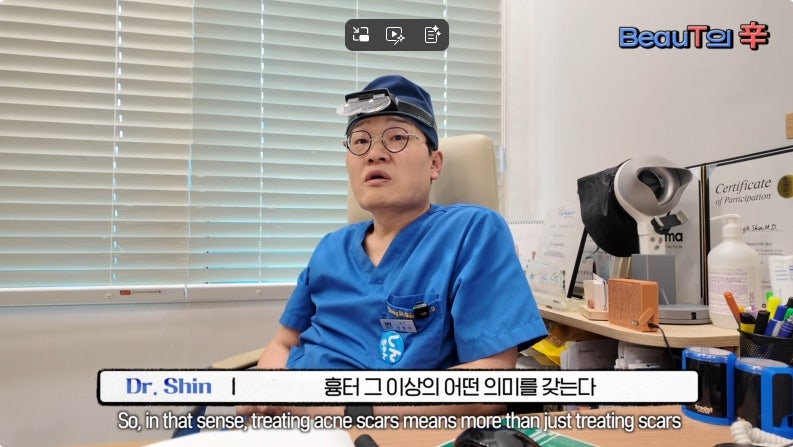
Dermatology Approaches to Men's Acne Scar Treatment

Hello, this is DM Dermatology Clinic. Many people struggle with acne scars and spend a lot of time searching for solutions. Recently, interest in skincare among men has grown significantly, leading to an increase in male patients visiting dermatology clinics. However, many still hesitate to undergo dermatological procedures due to uncertainty about the actual treatment outcomes.
Severe acne marks can impact you psychologically, leading to a loss of self-confidence. This can create a negative domino effect in various areas of life, such as your career or romantic relationships. In particular, many people neglect their skin issues hoping they will naturally fade away, but eventually decide to visit a dermatologist right before important events like job interviews or weddings when they see no improvement. Scar treatment carries a deeper significance beyond simply resolving a skin issue.
Achieving good results through men's acne scar treatment allows you to move forward without stress and enjoy life with renewed confidence.
Procedure Discomfort and a Tailored Approach
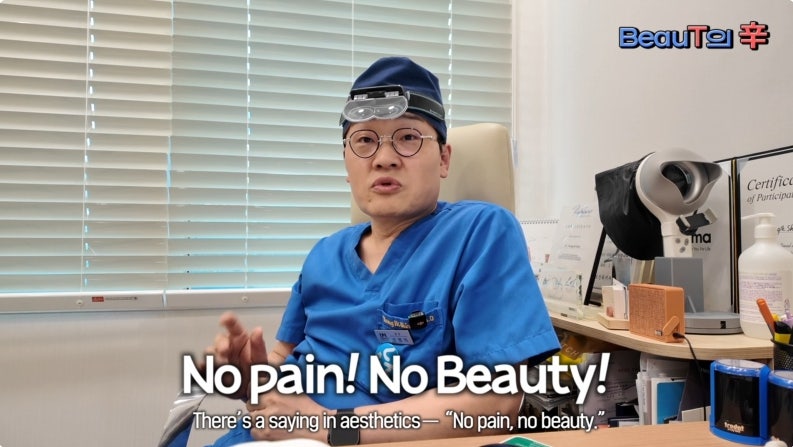
While the desire to improve your skin is strong, feeling apprehensive about clinical procedures is completely natural. Acne scar treatment can involve a degree of discomfort. This aligns with the classic aesthetic principle, "No pain, no beauty," meaning mild discomfort is simply part of the journey toward achieving better skin.
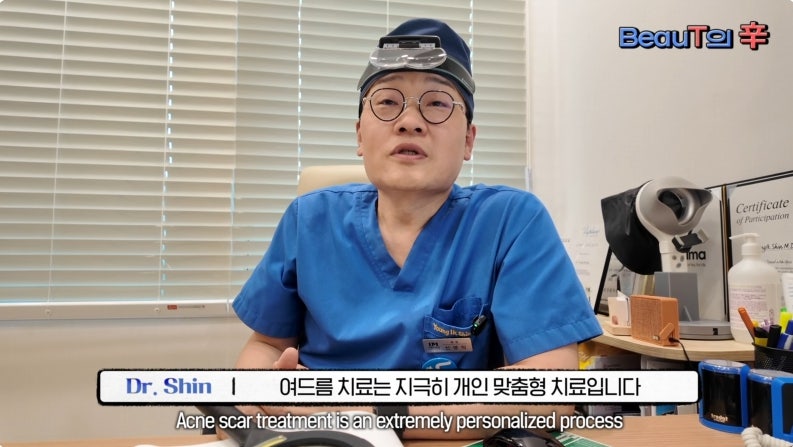
Above all, clinical experience shows that acne scar treatment represents the pinnacle of customized care. Because scar types vary from person to person—and even across different areas of a single face—treatment plans must be designed using the optimal combination of modalities.
Patients can achieve rewarding results by bearing the financial investment, managing the discomfort, and enduring the necessary downtime with positive expectations. Younger patients in their 20s and 30s tend to see comparatively favorable improvements.
In most cases, noticeable improvements in men's acne scars can be expected after just a few sessions.
Acne Scar Treatment Plans and Duration
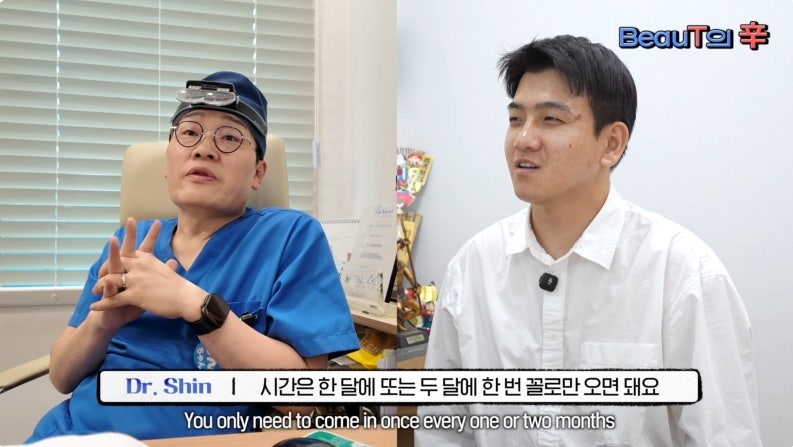
Noticeable improvements are usually seen after about 2 to 3 sessions spaced 1 to 2 months apart. A single session does not simply conclude in 10 to 20 minutes; the duration varies depending on the extent of the scars, so it is best to set aside ample time for your visit.
Large, deep, pitted scars are addressed using a combination of dermal filler injections, radiofrequency (RF), and lasers to level the depressed tissue harmoniously with surrounding skin. For large, pore-like scars, the pore structure itself is treated, followed by RF and laser therapy to reduce its size. Smaller pores can be refined overall using microneedle RF and fractional lasers.
Combining these with targeted medical therapies or chemical peels to smooth the skin surface further optimizes outcomes.
Downtime after each session lasts about one week. During recovery, tissue regeneration occurs, firming the skin and visibly tightening enlarged, pore-like scars to a degree you can clearly notice yourself. Repeating the treatment once more after 2 to 3 months will yield even more satisfying results.
Pain Levels and Tips for High-Satisfaction Outcomes
Fractional lasers generally involve more discomfort than radiofrequency treatments. Some patients who have undergone treatments previously might feel disappointed by a perceived lack of improvement. However, this is usually not a failure of scar therapy itself, but rather the result of not receiving care precisely tailored to their specific skin type and scar condition.
Men's acne scar treatment is highly individualized and customized. Since diverse scar types frequently coexist on a single face, truly satisfying results depend on a thorough consultation and a clear understanding of the treatment plan. Always proceed only after in-depth medical counseling—your time and money are valuable!
Radiofrequency-based men's acne scar treatments begin with facial cleansing and disinfection. Combining this with laser therapy can deliver even better results, although it may entail some discomfort. Over time following the procedure, you will see progressive improvements in your skin. In most instances, the discomfort is entirely tolerable, so there is no need to worry excessively.











Frequently Asked Questions
How many sessions are required for men's acne scar treatment?
Generally, visible improvement can be expected after about 2 to 3 sessions spaced 1 to 2 months apart. Because scar depth and type vary even on a single face, the frequency and intervals are customized to each individual. Patients in their 20s and 30s tend to achieve particularly favorable results.
How long is the downtime after an acne scar treatment?
Downtime after a single session lasts around 1 week. Once this period passes, noticeable improvements appear as tissue regenerates and large, pore-like scars contract. Scheduling another session after 2 to 3 months brings even greater satisfaction.
Is acne scar treatment very painful?
Discomfort is generally manageable, though it varies by procedure type. In particular, fractional lasers tend to cause more discomfort than radiofrequency treatments. This sensation is an inherent part of skin remodeling and the procedure is performed systematically after cleansing and sanitizing, so there is no need for excessive concern.
How are deep, pitted scars and pore-like scars treated?
They are managed through combined, personalized approaches tailored to the specific scar profile. Deep, pitted scars are elevated to match surrounding tissue using filler injections, radiofrequency, and lasers. Large pore-like scars are treated by reshaping the pore structure and reducing size with RF and lasers, while smaller pores are targeted with microneedle RF, fractional lasers, or chemical peels.